Skip to content

Production guide · South Florida

South Florida — a production resource

We have worked this market for twenty years — through the image-makers we represent, the productions we've stood close to, and the producers and crews who know this landscape by name. Bring us a project at the start and we help shape it; bring us one at the last minute, when the timing is tight and the brief unforgiving, and we know who can step in. There is no wrong time to call.

The environments within reach of one another are more varied than the market suggests. This is a working guide, not a directory. Our South Florida curated guides go deeper — location by location, context by context.

Plate VII © Andreas Ortner

The market

South Florida has the light. That is where most production decisions start — and here the light is notably consistent. Low and direct. Extended. A golden hour that runs past expectations. Shadow density that holds. Skin tones that photograph true. The heat is in the frame even when the frame is cool.

The market expanded after 2020, and infrastructure came with it: crew, equipment, and location access that used to be imported. Strong production companies and local crews now work this market with real depth. It is not New York's depth — but it is no longer the reputation that preceded it. If you come in knowing who to call, this market works.

The range of environments within reach of one another is the asset most people underestimate. Art Deco to industrial to tropical to waterfront to agricultural, within forty minutes of each other. A production week here can collect what would take four cities elsewhere.

We've been close enough to productions in this market to know who works it well — the producers, the coordinators, the crew. When clients ask us who to call, we have an answer. That is a different kind of value from a directory.

We do not work from a list. If the right person for a brief is represented elsewhere, we say so and make the introduction anyway — the firm places what the work needs, not what happens to be ours. No one else operates this way. It is why the New Yorkers, the Londoners, and the Europeans call us, trust us, return, and refer us on: a true creative office for the image-making economy.

Environments — a working guide

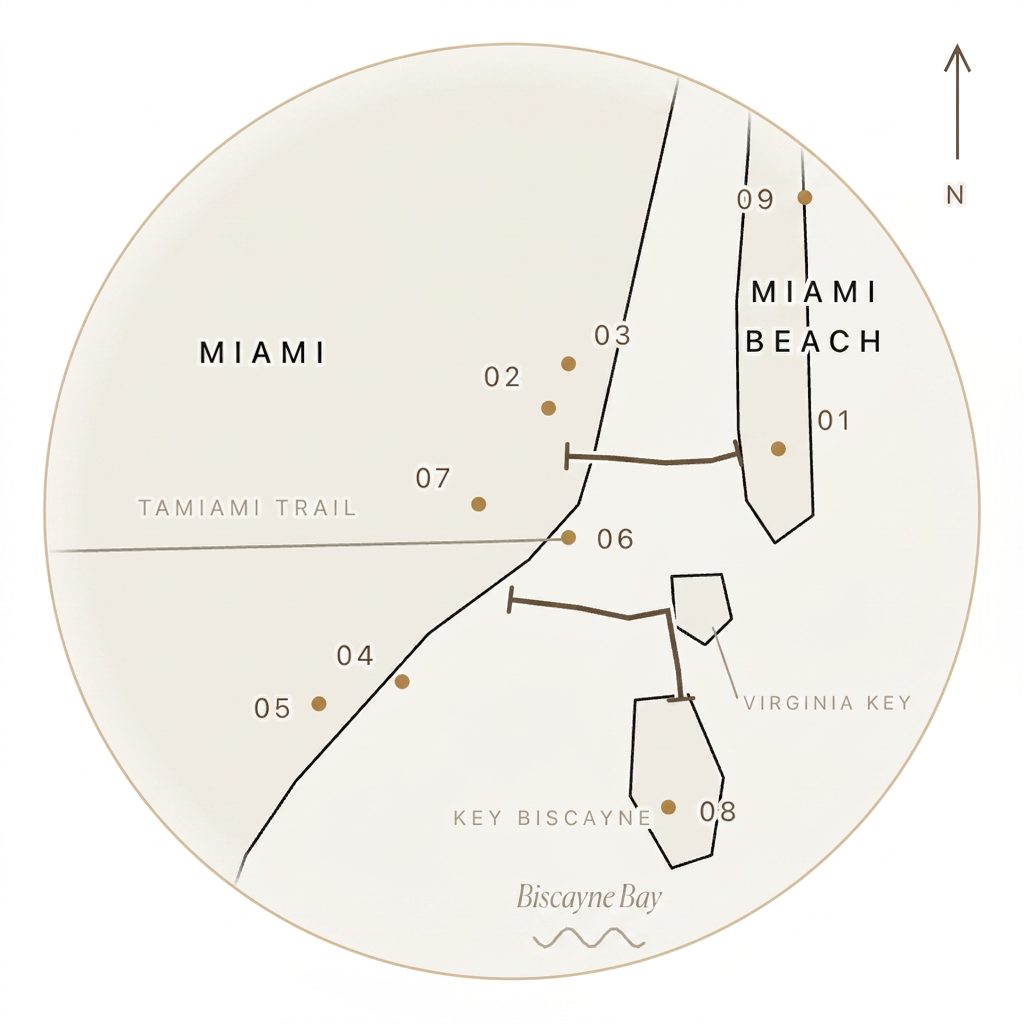
  1. 01

    South Beach / Miami Beach

    Architecture · Coastal

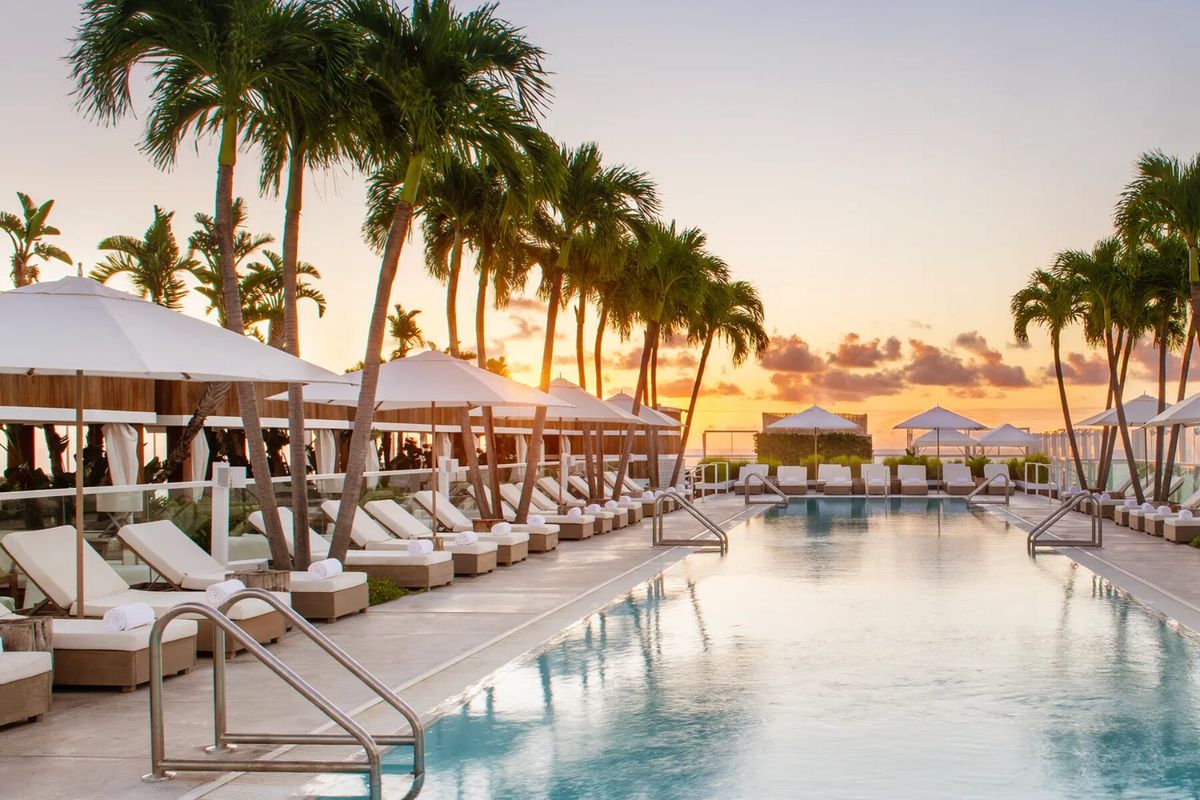
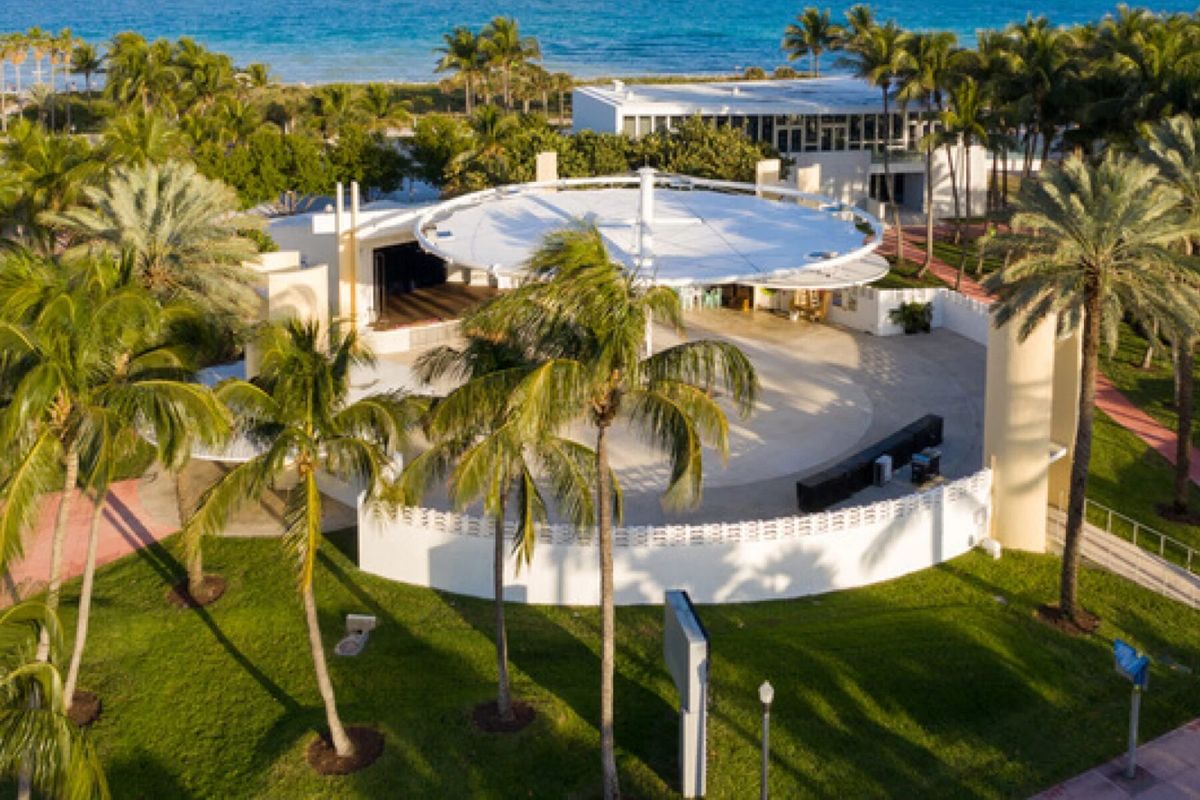
    Salt air, wide light, pastel geometry. Ocean Drive is the postcard — the Art Deco frontage everyone knows, the Hotel Victor among them — and it holds up in the frame with an early call, before the crowds. Collins Avenue and the quieter side streets give you the same architecture with more control, and the morning light comes in low from the east, unobstructed. Restricted permitting in peak season (December–March); plan four weeks out, minimum.

  2. 02

    Wynwood / Midtown

    Industrial · Interior

    The most-used district in the market, which means the most-seen. The murals are live — they change; a wall that read perfectly in January may be gone by March. The value here is the warehouse interiors: large, blank, controllable, high-ceilinged, with light you can manage — industrial utility without industrial inconvenience. The streetscape is a bonus, not the brief.

  3. 03

    Design District

    Luxury · Architecture

    Architecture that reads luxury without announcing it. Retail facades by architects who wanted to be noticed. Clean, high-spec, privately managed — permits can be arranged, backgrounds are groomed. Strong for product and editorial where luxury is the brief and the background needs to read considered rather than opulent. If you need a local contact here, we have one.

  4. 04

    Coral Gables

    Architecture · Estate

    Spanish Mediterranean architecture. The Biltmore Hotel. The Venetian Pool. Coral stone, and wide, canopy-covered streets. A different register from the beach — slower, older, more particular. Underused by the market, which is its advantage.

  5. 05

    Coconut Grove

    Residential · Tropical

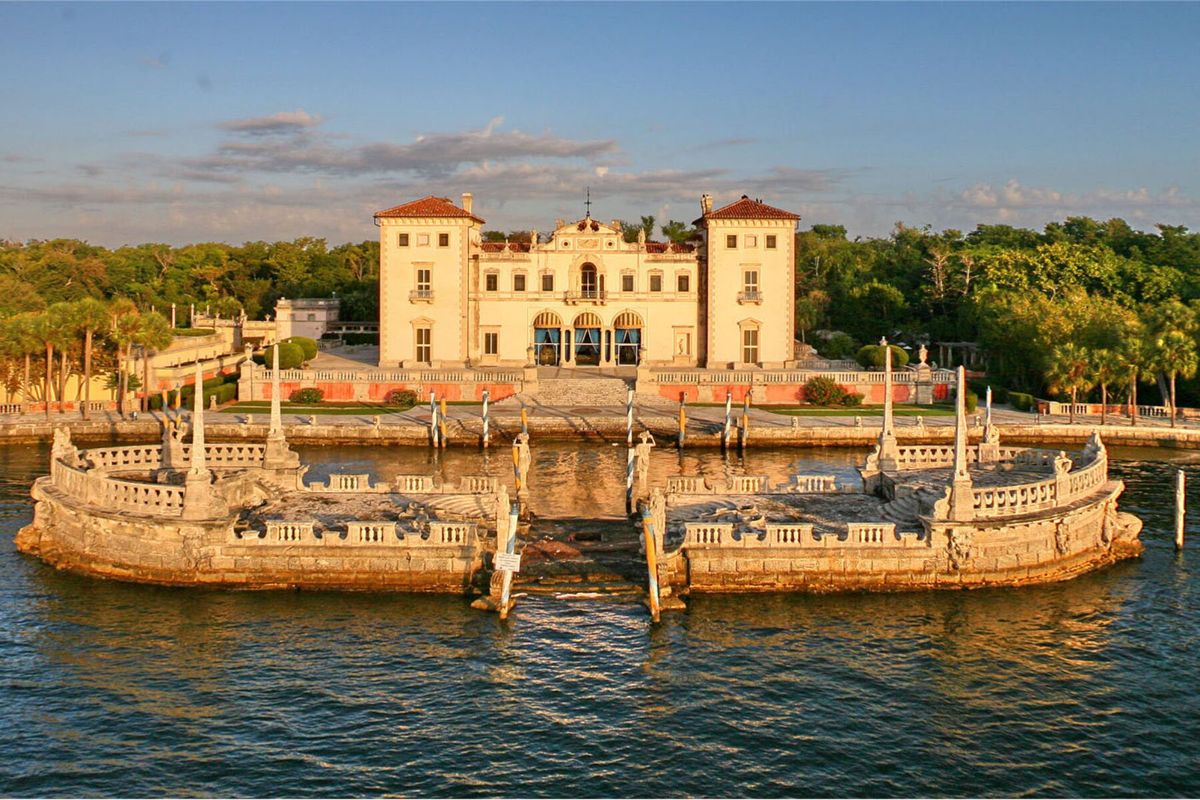
    Lush and dense. The established tree canopy gives a quality of light difficult to replicate anywhere else on the coast — filtered, warm, genuinely tropical without performing it. Good for portraiture and lifestyle briefs that need warmth that reads real; the neighborhood has pockets of architecture that reward a patient scout. At the edge of the Grove, on Biscayne Bay, Vizcaya Museum & Gardens is among the most versatile formal locations in the area — gardens, interiors, waterfront, all managed and permitted through one office.

  6. 06

    Brickell / Downtown

    Urban · Night-capable

    Glass and reflective surfaces, city density, and night capability that is underused — the skyline is recent enough to be clean. Strong for financial, technology, and corporate briefs where the background needs to read modern urban without reading New York. The Brickell City Centre structure offers controlled interior options. A producer who knows this area well is worth having on the call sheet.

  7. 07

    Little Havana

    Community · Cultural

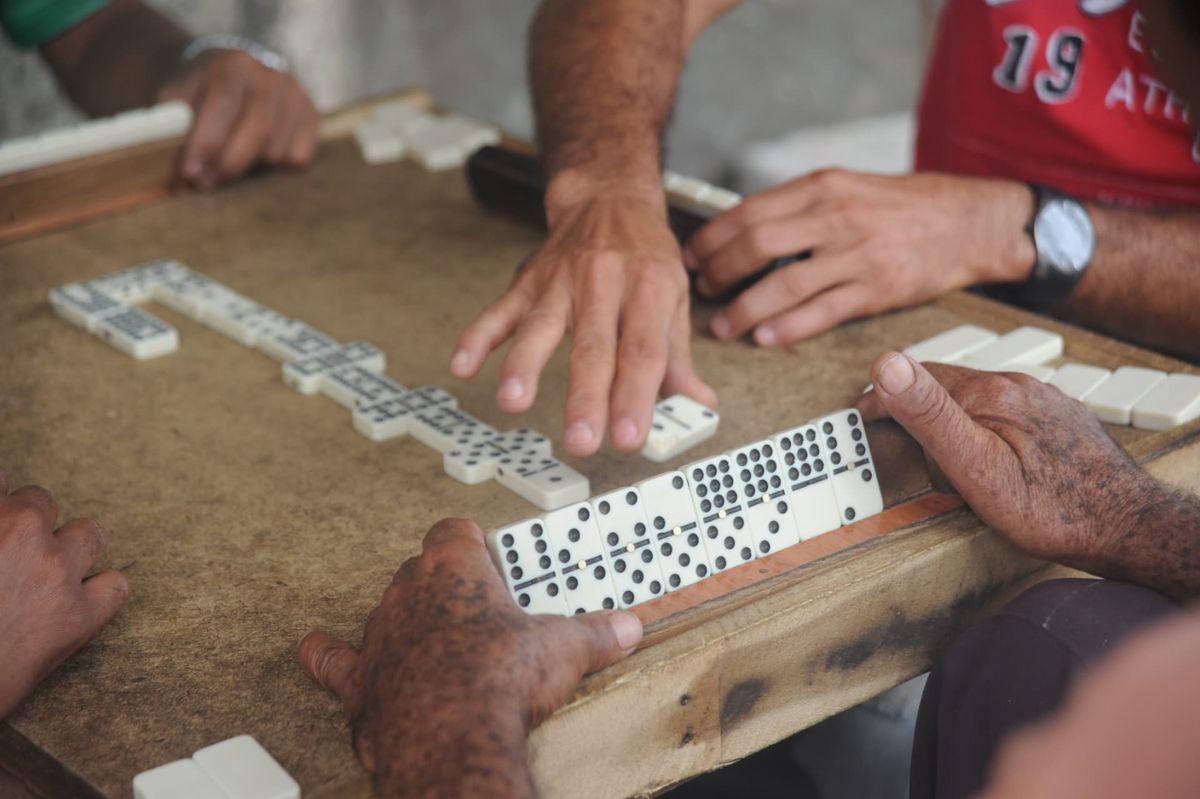
    Calle Ocho. A living, working neighborhood — largely Cuban-American, and itself, not a set. It reads real because it is. A community first and a location second: this is ground that asks for relationship and local context, and production teams without South Florida roots frequently miss that. If the brief calls for it, the approach matters as much as the permit. We refer to local producers who have those relationships built. We don't send a crew in cold.

  8. 08

    Key Biscayne / Virginia Key

    Waterfront · Natural

    Waterfront with space — natural backgrounds that read neither beach tourism nor luxury resort, but open, genuinely coastal, unhurried. A short drive from downtown, and rarely crowded on weekday mornings. Fewer competing productions than Miami Beach, though the parks here (state and county) run their own permitting. The causeway views are a usable secondary; Virginia Key's working waterfront adds an industrial-coastal option.

  9. 09

    North Beach / North Miami

    Estate · Undiscovered

    Less trafficked. A stretch of Collins Avenue in North Beach still reads 1960s without intervention. Estate locations with a scale South Beach can no longer offer. MOCA North Miami for institutional interiors. Worth knowing before you need it — the value is in the absence of crowds and the presence of options that have not been overshot. Ask us which local scouts work this stretch well.

  10. 10

    The Everglades edge

    Landscape · Early + late light

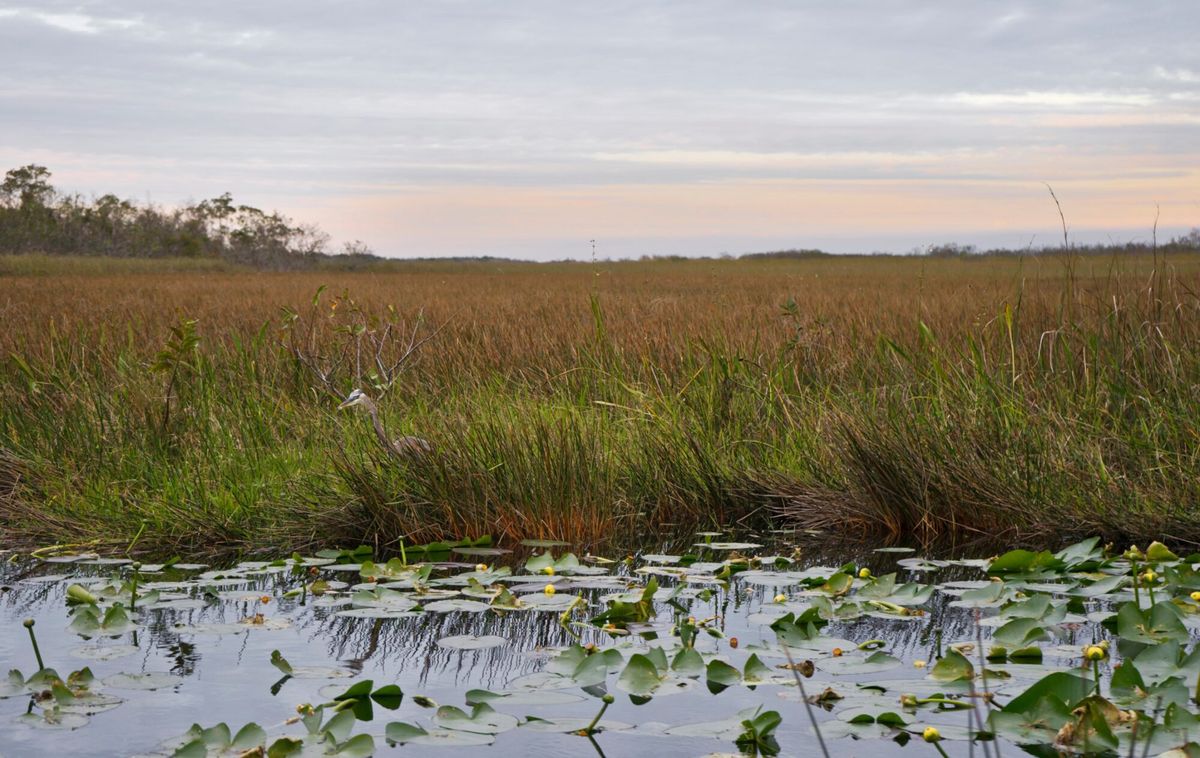
    Thirty to forty minutes west of Brickell along the Tamiami Trail — the eastern edge, not the deep park — and another world entirely: wetland, saw grass, hardwood hammock, open sky. The kind of landscape that does not read as American until you have seen it properly. Early morning and late afternoon are the windows: the light is soft and warm at both ends, and midday is flat, hot, and hard on crew and insects, most of all in summer. The dry season, roughly November through April, is the most comfortable, and its afternoons hold up. Limited local infrastructure; plan for self-contained production.

  11. 11

    The Florida Keys / Islamorada

    Waterfront · Tropical

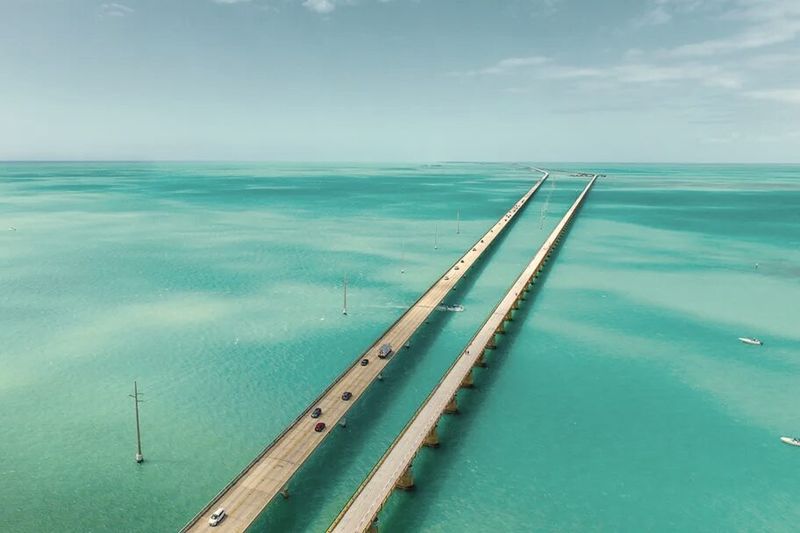
    An hour and a half south of Miami, and a different water entirely — the Atlantic and the Gulf within reach of one road. The light is cleaner over the Keys, the color of the water reads Caribbean rather than coastal, and the horizon does most of the work. The Moorings in Islamorada is the known quantity: a 525-foot pier and one of the largest private white-sand beaches in the Keys, both heavily photographed for a reason — they frame themselves. Access is private and the drive is the constraint — US-1 is the only road down, so plan travel days, tight call times, and self-contained production. Permitting runs through Monroe County and the individual properties. Early and late light on the water is the whole point; midday flattens it.

South Florida — the eleven environments, within reach of one another

Production intelligence

Permitting.
Miami Beach and Miami-Dade County operate separate permitting systems, and both enforce. Standard commercial permits run one to two weeks' lead time; peak-season Miami Beach runs longer. Private property removes most of the complexity, and film-office relationships reduce the friction further — the firm keeps them.
Weather.
October through May is reliably workable. June through September, morning shoots are excellent and afternoon thunderstorms near-certain — a 7am call with a 1pm wrap accommodates a summer shoot without loss. The problem is never the weather; it is failing to plan for it.
Crew.
The local crew base is markedly stronger than it was four years ago; most disciplines are locally sourceable for dates three or more weeks out. Urgency adds cost and narrows options, as everywhere. Specialty disciplines may come from Atlanta or New York. We keep relationships with local production companies and coordinators who know which crews are dependable here — ask us for a referral.
Equipment.
Major categories are available through Miami rental houses. Specialty or high-volume needs may ship from Orlando, Atlanta, or New York — factor transit into prep. We can point you to the vendors we'd use.
Season.
Art Basel — early December, a long weekend; the dates shift each year, so confirm the current edition. It brings the global art world to Miami: accommodation costs multiply and location availability contracts. An Art Basel-adjacent brief, plan twelve weeks out. Everything else, avoid the week.
Talent.
The firm represents image-makers with established South Florida ties and proven travel capability. Availability and rates by project — start with the client request form, or email production@belleandcompany.com.
Producers & referrals.
We are not a production company — but we know who works this market well. If your project needs a local producer, a coordinator, or a specific crew introduction, that is a conversation worth having. We refer selectively, by the brief. Start with the client request form, or email production@belleandcompany.com.

The right person for the work

We recommend on experience — twenty years of knowing who can actually do the work. If a brief needs a movement choreographer, or a mermaid who can swim in a tank, and it isn't someone we represent, we know who is — and we'll say so. The firm doesn't withhold the right person because they're repped elsewhere; we connect clients to what the brief needs, not to what happens to be on our list. That is why the New Yorkers, the Londoners, and the Europeans call, trust us, return, and refer us on. Early in a project or at the last minute, the value is the same: the right person for the work, found.

That continuity — the returning client, the referred client — is what this business has always been built on. Not transactions. Trust, passed forward.

Belle & Company · info@belleandcompany.com · Established 2006 · USA / UK

Curated South Florida guides are coming.